What Is Artificial Intelligence? A Simple Guide for Beginners
Artificial intelligence, often shortened to AI, is a phrase you will hear almost everywhere today, from news reports and classrooms to adverts for phones and apps. It can sound complicated, even a little mysterious, but the basic idea is much simpler than it first appears. In this guide, we will explain what artificial intelligence means in plain language, how it works, where you already meet it in daily life, and what it can and cannot do. You do not need any technical background to follow along.
What Does Artificial Intelligence Mean?
At its simplest, artificial intelligence means computer systems that can carry out tasks which would normally need human intelligence. Those tasks might include recognising speech, understanding written language, spotting patterns in pictures, making a decision based on information, or solving a problem step by step. A calculator can add numbers quickly, but we do not usually call that intelligence, because it follows one fixed rule. An AI system, by contrast, can adapt its answers based on the data it has seen and the goal it has been given.
How Does AI Actually Work?
Most modern AI systems learn from examples. Developers give a system a large set of data, such as thousands of labelled photographs, sentences, or customer questions, and the system looks for patterns in that data. Over time, it builds a kind of internal model: a set of rules and weightings that help it predict the most likely answer for a new example it has never seen before. This process is often called training.
Training does not mean the computer understands the world in the way a person does. It does not know what a cat is in the sense of having seen one, stroked one, or heard one purr. It has simply learned that certain shapes, colours, and textures in pictures are often labelled as cats. That distinction matters, because it explains both why AI can be so useful and why it sometimes makes confident mistakes. When a new example looks very different from the examples it was trained on, its answer may be wrong.
The Main Types of AI You Will Hear About
People often divide AI into a few broad groups. The first is narrow AI, which is designed for one specific job. Almost every AI tool in everyday use today is narrow AI: a translation app, a chess program, or a system that reads handwriting. It may be excellent at that one job and useless at everything else.
The second idea is general AI, a system that could learn and reason across many different areas, much as a person can move from cooking to driving to writing a letter. No such system exists today in a reliable, general sense, although researchers discuss it often. The third idea, sometimes called superintelligence, describes a hypothetical system far beyond human ability in almost every area. That remains speculation, not a product you can buy or download.
You may also hear the term machine learning. This is a major part of AI. It refers to systems that improve their performance through experience with data, rather than being given every rule in advance. Deep learning is a form of machine learning that uses layered networks, loosely inspired by the brain, to handle complex data such as images, speech, and language. These layers help a system build up from simple features, such as edges in a picture, to more complex ideas, such as faces or objects.
Where You Already Use AI Every Day
AI is already woven into ordinary life, often in places you may not notice. When you unlock a phone with your face, a system compares features in the camera image with a stored pattern. When you type a message and your keyboard suggests the next word, a language model is predicting what you are likely to write. When a map app reroutes you around traffic, it is using current and past travel data to estimate the fastest route.
In health care, AI tools can help doctors review scans and records, although a human professional still makes the final decision. In farming, systems can spot signs of crop disease in photographs and help farmers act earlier. In education, tools can give students practice questions, explain a topic in different words, or help a teacher mark routine work more quickly. In shops and banks, AI helps spot unusual transactions that might signal fraud, and helps recommend products based on past purchases.
What AI Cannot Do Well
AI has real limits, and understanding them helps you use it wisely. First, AI can be wrong, and it can sound very confident while being wrong. A chatbot may invent a fact, a translation tool may miss a joke or a cultural reference, and an image tool may produce a picture with extra fingers or unreadable text. Always check important facts from a reliable source before you act on them.
Second, AI does not have common sense, feelings, or moral judgement. It cannot understand the full context of a difficult personal decision, and it cannot take responsibility. It can suggest wording for a sensitive message, but only you can decide whether that wording is kind, honest, and appropriate.
How to Start Learning About AI
If you are curious, the best way to learn is to try a few tools with small, safe tasks. Ask a chatbot to explain a topic you already know well, so you can judge the quality of its answer. Try a translation or transcription tool and compare its output with the original. Notice where it helps and where it struggles. This hands-on approach builds a much clearer picture than reading definitions alone.
Next, learn a few key words and use them with confidence: data, model, training, and prediction. Data is the information a system learns from. A model is the pattern-based system built from that data. Training is the process of building the model. Prediction is the answer the model gives for a new input. With just those four words, you can follow most beginner explanations of AI.
Frequently Asked Questions
Is AI the same as a robot?
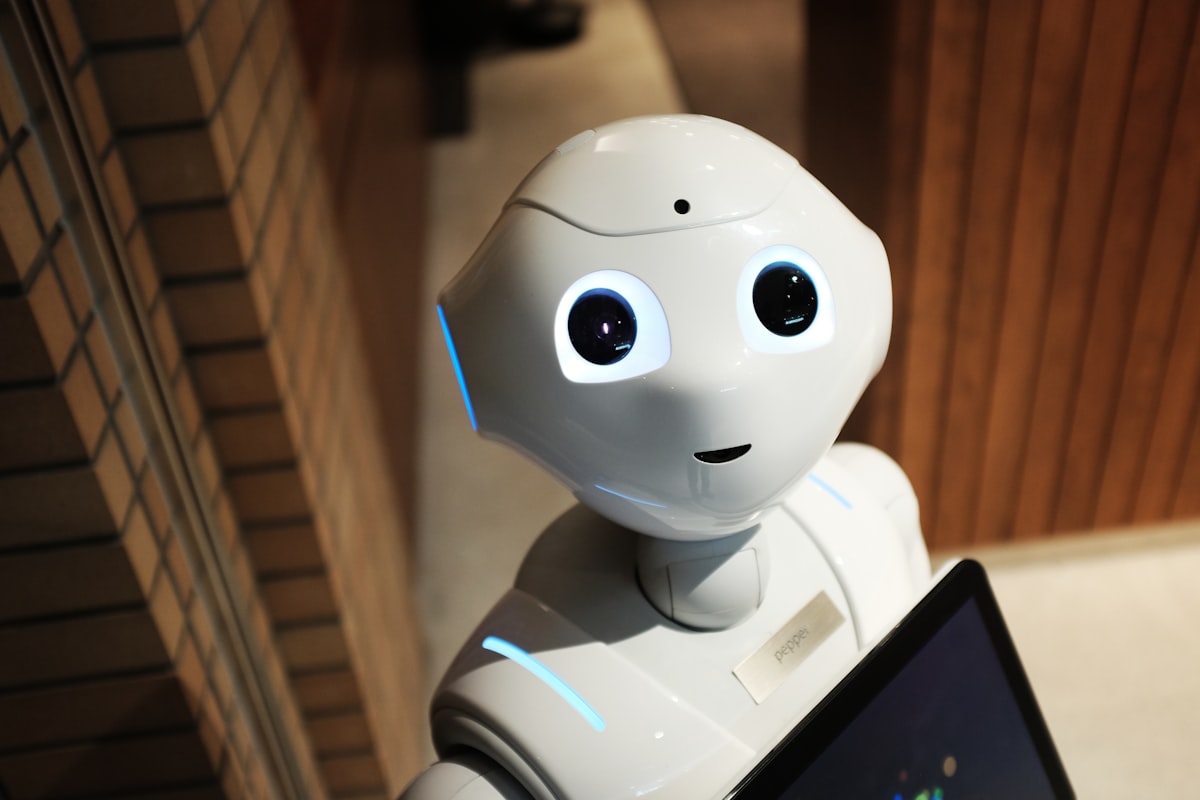
No. A robot is a physical machine that can move and interact with the world. AI is the software and intelligence behind a system, which may or may not be in a robot. Most AI you use lives in phones, computers, and websites, with no moving body at all.
Will AI replace all jobs?
AI is likely to change many jobs by taking over repetitive tasks, but it is not a simple story of replacement. Many roles will change, with people spending more time on judgement, creativity, communication, and care, while AI handles routine sorting, drafting, and searching. New roles in building, checking, and managing AI systems are also appearing.
Do I need to know coding to use AI?
No. Most everyday AI tools are designed for ordinary users. You can type a question, speak a command, or upload a file without writing any code. Coding becomes useful only if you want to build or customise AI systems yourself.
Is everything labelled AI really intelligent?
Not always. The word AI is sometimes used for marketing, even for simple automation or a set of fixed rules. A useful test is to ask what the system learns from data and how it adapts. If it simply follows the same steps every time, it may be automation rather than AI in the fuller sense.
Final Thoughts
Artificial intelligence is best understood as a set of tools that learn patterns from data and use those patterns to help with specific tasks. It is already part of daily life, it is powerful for sorting information and handling routine work, and it still has clear limits. By learning the basic ideas, trying tools carefully, and checking important answers, you can use AI with confidence rather than confusion. The goal is not to be impressed by the technology, but to understand it well enough to decide when it helps and when human judgement should come first.